Sunday, July 8, 2012

Two By Two


Jesus went about among the villages teaching. He called the twelve and began to send them out two by two, and gave them authority over the unclean spirits.  He ordered them to take nothing for their journey except a staff; no bread, no bag, no money in their belts; but to wear sandals and not to put on two tunics. He said to them, "Wherever you enter a house, stay there until you leave the place. If any place will not welcome you and they refuse to hear you, as you leave, shake off the dust that is on your feet as a testimony against them."  So they went out and proclaimed that all should repent.  They cast out many demons, and anointed with oil many who were sick and cured them.   Mark 6:6-13  

Today Mark’s gospel remembers the first time that Jesus sent his disciples out on a missionary journey.  And what did he tell his disciples to do? 

He sent them out to meet new people on the road….  He told them to give each person a message: The kingdom of God has come near you…. He told them to pray for the sick and heal the troubled.    

It sounds like those people who come through my front gate, who ring my doorbell to share their faith, are just following Jesus’ instructions: Go meet new people, and tell them the good news. 

(It’s hard enough to open my door, to be kind to my visitors – who are strangers to me – and then politely say good-bye; how could I ever go door-to-door to share my faith?)

But the gospel says that Jesus’ disciples came back to tell him that many people received their message, and many were healed.  They had followed Jesus’ directions:  

            Take nothing for your journey.
            Dress simply.
            Stay with people in their homes.
            Tell them your good news.
            And always go two by two.

So today, I’m trying to imagine going off on a journey, sent by Jesus, following his directions.  I’m not trying to turn into a door-to-door salesman, going off to talk to people we’ve never met.   No, I’m picturing someone I know already – someone I care for, someone I’d like to comfort, someone who needs to hear good news.   

Everyone here knows someone who is asking questions about their faith. It could be one of your children…  It could be a good friend or a close neighbor….  It could be one of your grandchildren…. 

There are times in life when everyone has questions –  when we’re small children, first exploring the world;  when we’re adolescents, first stretching our growing minds; when we’re first retired and beginning to wonder about the rest of our lives; and any time trouble strikes – these are the times we need good news. 

So with a picture of someone in your mind, listen again to Jesus’ directions:

He says, take nothing for the journey because then you’ll have to depend on others.   Remember you aren’t the only person with something to give – everyone you meet will have something to share with you.    

Dress very simply – because dressing up may put distance between you and others.  You won’t want to wear – or say – anything that keeps you from getting to know people.      

Stay with people, accept their hospitality – because that’s the way you’ll get to know them; that’s the way people learn about each other, by sharing space with each other.    

Go two by two – because if you go with a friend, you’ll be able to help each other – and because Jesus said, “When two or three are gathered together, I will be there with you.”  You won’t be alone; the Spirit will be with you.  (Matthew 18:20)

And  once you’ve gotten to know someone – by staying with them, by listening to them, by loving them – then you can tell them your good news, because that’s your gift for others – what’s happened to you.

A modern missionary journey:  I have a friend who decided, when he was about 70 years old, to write a letter to his children.  He had five adult children, all with children of their own, and he wanted them to know what his faith meant to him now that he was getting old.  Especially, he wanted his children (and his grandchildren) to know what had helped him through the years, whenever his life had been difficult.    

It took my friend a very long time to write his letter. First, he had to find the words to describe what he had learned from life, and then he had to find the words to tell them what he believed about God.  But even after he found the words to express himself, he had to ask what those words might mean to each of his very different children.  All of his children had grown up in the Episcopal Church, but now one child was a Presbyterian.  One was an Evangelical.  One was a Mormon.  One had a strong faith in God, but didn’t have a church. And one was an adamant atheist.  What words could he write, what words could share his faith without trying to impose it on them?   

It took him more weeks to re-write his letter. And then, before he mailed his letters, he took copies to a couple of friends – and he asked them, “I’m trying to tell my children what life has taught me, and what my faith means to me.  Will you read this letter and tell me what you think?” 

My friend was proceeding two-by-two.  That is, he didn’t write his letter all by himself.  He tried to listen to the Spirit speaking in his heart; and he went to others, to hear their thoughts and ideas.

It’s been more than ten years since my friend mailed the final version of his letter to his children.  I called him yesterday afternoon, to find out what had happened with his children in the years since his letter was mailed.  (He’s now 82 years old, and the first thing he told me was that he’s thinking about writing a new letter to his children.)

As we talked, he remembered what each of his children had said when they received the letter – and what had happened when they had read it to their own children.   But this is what really struck me yesterday:  As he talked about each of his children, he remembered what he had learned from them. And when he spoke about each of his children, one by one, he said that each was still growing in his or her own way.  It was clear, from his words and his voice, that his letter had begun a conversation about faith, a family conversation that still continues today.  

Isn’t that what Jesus is really asking his disciples?  Start your own conversation about faith.  Go out into your life – and get to know the people in it.  Love those people; give what you can to them; receive what they have to give you; try to bring them healing – and always remember, as you walk through your life, that you’re never alone on your journey.

And whenever the time is right for someone,
share the good news with them: 
You are never alone; God is always with you.


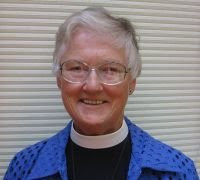
A homily preached at St. Benedict’s Episcopal Church on July 8, 2012


Saturday, June 30, 2012

Who did Jesus heal?


The Woman with a Hemorrhage
Painting by Louis Glanzman

from the Gospel for Sunday, July 1:  Now there was a woman who had been suffering from hemorrhages for twelve years. She had endured much under many physicians, and had spent all that she had; and she was no better, but rather grew worse. She had heard about Jesus, and came up behind him in the crowd and touched his cloak, for she said, "If I but touch his clothes, I will be made well." Immediately her hemorrhage stopped; and she felt in her body that she was healed of her disease. Immediately aware that power had gone forth from him, Jesus turned about in the crowd and said, "Who touched my clothes?" And his disciples said to him, "You see the crowd pressing in on you; how can you say, `Who touched me?'" He looked all around to see who had done it. But the woman, knowing what had happened to her, came in fear and trembling, fell down before him, and told him the whole truth. He said to her, "Daughter, your faith has made you well; go in peace, and be healed of your disease."       Mark 5:25-34  

 
A parable of a cane:

 I now have a very unreliable knee … It doesn’t really hurt a lot, but it goes out from underneath me – and so I’ve started walking with a cane (or more accurately, a trekking pole).  On the good side, the cane helps me stay balanced, and makes it easier for me to walk around …. On the other hand, the cane labels me – it makes me feel different; it marks me as someone with an infirmity. (I noticed I felt better last Sunday, because I wasn’t the only one at St. Ben’s with a cane!) 

Whether it’s a knee – or your hip, or your child’s illness, or your friend’s cancer, whatever is wrong with us – we want it to be healed.  We want a doctor, or a therapist, or God, to fix us – to take away the pain, to take away the disease. But our problem is more than physical; we also need people, we need to be part of a community.   

Over the years, I’ve noticed that when I’m depressed, my first instinct is to stay away from other people.  And, over the years, I’ve noticed that when something is wrong with my body – my shoulder, my knee – my first instinct is to stay home.  (Maybe you go through this, too.)  Yet we need to belong, we need to be reminded that people care for us, we need to know that we are included in their circle of love. Sometimes that means screwing up our courage and going out among people to ask for help, even if our illness makes it really difficult. That’s what the woman with the hemorrhage did.  (Maybe she used a cane!)

Think of the Middle Eastern crowds you see in the news – those large crowds of shouting, pushing men. There are very few – if any – women in those crowds.  The woman with a hemorrhage didn’t belong in that crowd; it wasn’t safe for her, and she wasn’t wanted – not only was she a woman, she was bleeding.  The rules said that bleeding made her impure; she was supposed to stay away – not just from the crowds, but from synagogues and even family gatherings.  Think of it – the gospel says she had been suffering for 12 years – that’s 12 years of bleeding, and 12 years of isolation.

When we first read this story, this woman seems typical of the people who came to Jesus for healing – she has a mysterious illness, and then Jesus gives her a mysterious cure.  (Actually, this woman’s story is one of the stories that Thomas Jefferson cut out of his Bible – because he couldn’t explain – and he couldn’t believe in  – these healings, these miracles.)  But in the first century this healing wouldn’t have surprised the people around Jesus, because there were many spiritual healers in his day.  What really surprised the people around Jesus was this: it was not how, but who got healed.

Who needed healing in Jesus’ society? 

All kinds of people came to Jesus for healing: the blind, the lame, the deaf; the mentally ill; lepers; and those close to death from many diseases. 

Today we know more about the causes of these physical problems. We understand the origins of blindness, leprosy, uncontrolled menstrual bleeding, childhood infections and all the diseases that were mysteries in the first century.  But we have forgotten something that the people of Jesus’ society believed: All those illnesses and physical conditions made people impure –sickness forced people to the margins of their society. They had been taught that to be sick, to be imperfect, to be marred in some way, violated God’s command: You shall be holy [that is, exclusive and whole], for I the Lord your God am holy (Lev. 19:2).    

Sickness was seen as a flaw in God’s perfect creation – and it was usually seen as the sick person’s fault.  When someone was sick, people believed that God had sent the illness, for a divine purpose – or as a punishment for sins.  

Today we know that sickness results from flaws in the body’s systems (heart, mind, cancers), or from battles waged by hostile organisms (bacteria, viruses).  But old ways of thinking still persist. (Don’t we often ask ourselves, ‘Why did God do this to me? What did I do wrong?’)

Who could heal people in Jesus’ time?  There was little medical knowledge, and there were no doctors. Anytime a person was healed, it was seen as a miracle – and a miracle of healing always came from God, sometimes through people with gifts of healing. The gospels show us that Jesus was seen as one of those healers.    

Today we know trained medical agents – people who have studied the human body and diseases – as our healers.  Even when a disease cannot be healed, we still anticipate that someday (soon) modern healers will understand cancers and viruses and mental illnesses and be able to fix them.   But even today, don’t we still pray for the sick?  (Why do we ask God for help – unless we still think God has a fundamental role to play in healing?)

Besides losing their health, the sick in Jesus’ time were also excluded from society.

It didn’t matter whether they were contagious or not.   The mentally ill were sent away from their villages; lepers had to stay away from the healthy; bleeding women had to stay in their homes.   

Today we know that sickness is not a sign of God’s rejection.  Even when the disease is seen as contagious and the person must be isolated, the community usually regards them as full  members. and prays for God’s help and intervention.  But old ways of thinking still persist: remember, 30 years ago, our culture’s reaction to the first people with AIDS.  Surely it was their fault! 

Today when healing occurs, we tend to think that people are restored to themselves – we might say “they’re back to their old selves” – now they can go on with their lives.   But does our modern individualism really reflect our human reality?  We tend to forget that full health means belonging to a community. 

There is a deep Biblical truth hiding under the surface of today’s gospel story:  God has made human beings for community, and it is only when we belong to community that we can find true health and wholeness.

Think about what this Gospel story tells us:

This woman was supposed to stay home, but she went out into the crowd anyway – and when she touched Jesus, she was healed.  But notice what else that happened: Jesus accepted this woman – he accepted her fully.  Instead of noting that she had broken a religious rule, he noted her courage and her faith.  And he told her, “Daughter, your faith has made you whole; go in peace.” 

So the gospel stories of healing tell us much more than, “Jesus heals the sick.”  Gospel stories like this one are gradually teaching Christians – and it’s taking us many centuries to learn this lesson – that God’s healing is for everyone – for the rich and the poor; for men and for women; for Jews and for Gentiles; for slaves as well as the free.

Think again about what the story tells us:  Because we’ve heard so many stories of Jesus’ healings, we’re not surprised that he doesn’t ask for payment.  (To use today’s language about medicine, Jesus doesn’t ask for insurance papers; and he’s not going to send her a bill.)  

But we should be surprised that Jesus is willing to spend time with this outsider, this poor woman on the margins of her society.  Here’s the gospel surprise: By his actions and by his words, Jesus is saying God’s healing is for everyone.  He is saying there are not ‘insiders’ and ‘outsiders’ but one community that includes everyone. 


We won’t see how radical Jesus was until we see how he was expected to act:

He was expected to prefer people who followed the rules. (It was believed that the religious rules kept the whole community safe and holy.)

He was expected to prefer the rich over the poor. (The rich obviously had more power – but they were also believed to be blessed by God.)

He was expected to spend time with men, and not with women. (Women, even when they were healthy, were supposed to stay at home.)

He was expected to spend time with adults, and not with children. (Children, of course, were thought to be much  less important than adults).

And yet – he responded to them all. 


Today, we Americans are still arguing about health-care.  

We are still asking the age-old question: How do we heal the sick?  And even when we know how to cure an illness, we are still asking  the question, how do we pay for it? 

But we’re also asking another old question:  Who is worthy of care?   Is it just hard-working adults with good jobs?  Maybe we should add our children, still too young to be self-sufficient?   Maybe we should we include the elderly, most of whom worked hard for a living?   Who is worthy of care?

Among all the arguments, all the points of view, all the words spoken this week, came this telling phrase from a talk-radio host, who labeled the poor as ‘the moocher class’  when he said, “I am so sick to death of the destruction of this great country by the moocher class.”

Think of it:  Was the woman with a hemorrhage part of the ‘moocher class’? She had no money, she didn’t work, and her bleeding excluded her from her community.  Was she not worthy of care, not worthy of healing?  

Think of it: In our own society, how many people are thought to be in the ‘moocher class’?  How many people are labeled as ‘not worthy of care’?

Jesus told another parable, in which someone asked a king: “When was it that we saw you sick or in prison and visited you?”  And the king answered them, “Truly I tell you, just as you did it to one of the least of these who are members of my family, you did it to me.” (Matthew 25:39-40)


Today’s gospel story makes me want to ask some new questions about healing.

I’m no longer asking the question, How did Jesus heal?   Because I think this is the question that really needs answering:  Who is worthy of healing in today’s society?  The gospel gives us the answer: Everyone is worthy – no exceptions.   

And I’m also thinking, even in this modern era when we have great doctors, and good hospitals, and fantastic medical researchers – in this era when we have an ability to heal that Jesus himself would have envied – we ourselves are in great need of God’s deepest healing. 

We need God to open our hearts and minds to the good news – which is not only that God loves us, but that God wants us to love others without barriers, without distinctions, without limits.   In fact, God wants us to love in the same way as Jesus loves:

If we but touch his clothes, we will be made well.
cf Mark 5:28